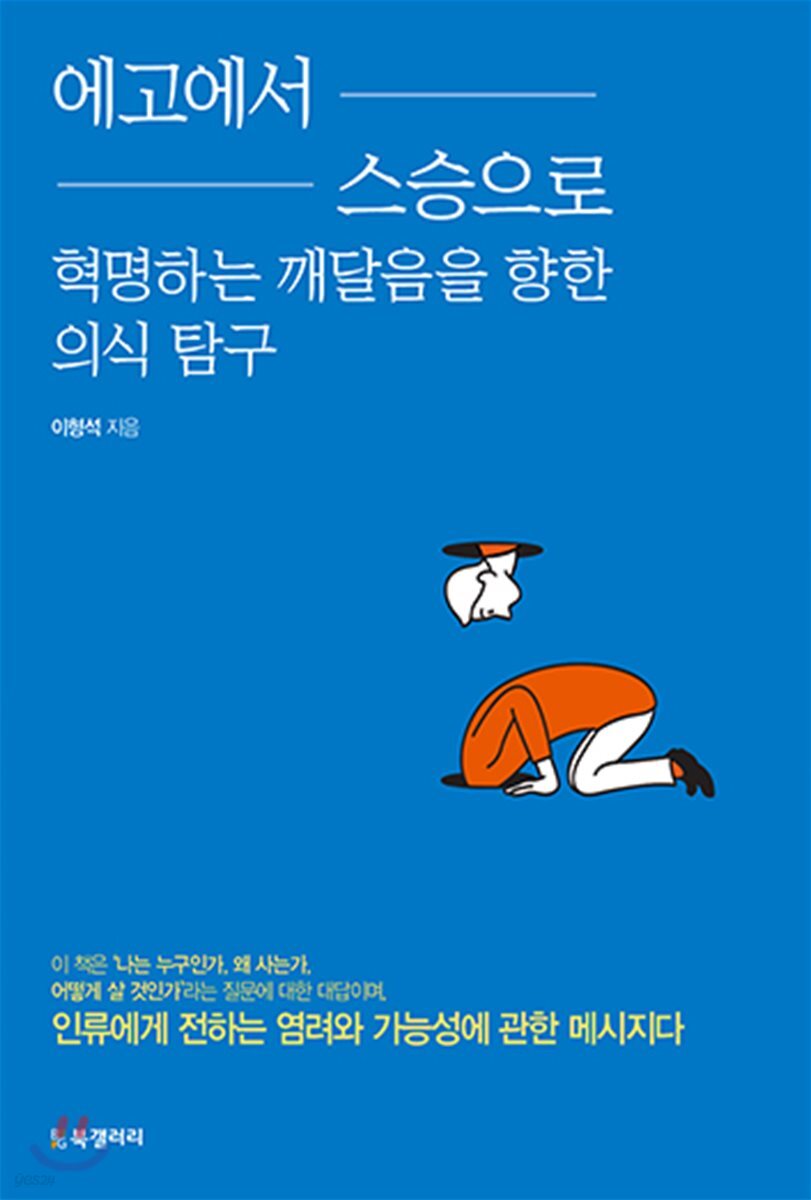
Overall
A book containing the author’s own definitions and readings of the various notions and emotions human beings hold. I had thought — perhaps because I am relatively sensitive — that there were many places where I felt something peculiar; reading the author, I came to see that these are universal phenomena anyone human goes through.
Notes
Problems we do not perceive
Conditioning
Infancy: parents wrap up the most subjective values — like and dislike, good and evil, beauty and ugliness, which they mistakenly believe they experienced for themselves — as sincere advice or information full of love, and recommend or even force them on their children.
I used to think that my parents, at least, let me experience the world in my own style, but looking back I often notice that I too am simply following their style. In fragments: from a mother with acute senses I learned how to choose clothes and how to listen to music, and from my father a rational way of thinking and a capacity for planning. Deeper things than these have been internalised over a long time, and I feel I have lived naturally assuming they are right. My values will as a matter of course pass on to my own children, but I think I should teach my children how to doubt me as I pass them on, and the subjective values of others throughout the process of socialisation.
Childhood: … even when their own values collide with what society demands, most subordinate themselves to society’s values and compromise at some reasonable line …
Middle and old age: … you reject anything that runs counter to or contradicts your values, and even strive endlessly to persuade the other person, or to prove by force of argument that you are right. … Having finished every preparation for conditioning and contaminating the next generation, you begin scanning for a target, watching for an opening, under the illusion that you are passing on a lifetime of experience (?) and wisdom (?) to those who come after.
People are built to select the memories that suit them.
Identification
It never occurs to you that the body is merely a part of yourself. Identifying this “body” with the “self” is the most fundamental problem behind human suffering and tragedy.
Human beings live continually hypnotising themselves with the illusion that they are at least not inferior to the people around them, that they are at least slightly above average (the Lake Wobegon effect), that in some respect they are superior to others, and that they might even be the best.
The ego continually seeks out acceptable objects of interest, but resolutely rejects information that differs from or contradicts its memories, defending and protecting those memories. The ego doubts everything, but never doubts the interpretations and judgements that rest on its own memories.
Automation
We merely gather up one-off knowledge and information, and that accumulation of shallow information just becomes a rubbish dump.
I realise this while scrolling through countless shorts. Why can I not stop watching a video of someone in Southeast Asia peeling a pineapple? Amid the flood of information and dopamine, I should build the habit of first asking whether I actually need such trivial, shallow information.
Modern education neither teaches nor learns anything about the silence that uses no words. Language is never receptive but aggressive, and it destroys the most precious values of existence: intimacy and consideration, love, compassion, mercy.
Your act of continually talking is a device for relieving dissatisfaction, and it gives you a kind of release. When you talk with someone, the other person is merely a means; you are simply spitting the story out.
I relate to this deeply. I regard silence as a very important means of expression, and as the author says, modern education does not teach the value of silence. Perhaps as a consequence, people today cannot bear silence — they fear it. However much empathy my own words carry from my side, there is no knowing whether the other person will receive them whole. From that angle silence can be a signal that I am giving the other person my full attention, and I believe it can convey more empathy than any words.
Foolishness (ignorance)
What lies at the very base of human foolishness is not an absence of knowledge or information but an absence of knowing oneself.
Because knowledge produces the illusion that “I know”, the more it accumulates the more it plants the fantasy that you are becoming a deeper, more intellectual being.
Stacking the bricks of knowledge and information neatly around yourself ends in shutting yourself inside a castle.
Even advice you give in complete sincerity (?) does not connect through to changing the other person’s life or correcting a bad habit.
Self-defence
Show the honesty to look your own faults in the face and admit them, along with openness, tolerance, and humility, and the problem resolves itself far too easily and simply.
Refusing to acknowledge error, and groundless faith in your own values, block off the chance to face and correct a problem and grow into a more mature being.
I realise I have never once doubted the grounds of the values I hold. I think they were formed merely out of experience or convenience. Whenever I feel a value at work, I should build the habit of doubting its grounds and checking whether it holds up.
Religion
Belief is neither experience nor “knowing”. The fatal obstacle of belief is that it induces you to abandon inquiry.
Problems we perceive but do not improve
Attachment
The greater the sunk cost you have invested, the closer to impossible it becomes to enter the intellectual stage of doubting that value objectively and from multiple angles.
Dependence (enslavement)
Everything you expect of another person is merely hope; your dependency grows, and even when that expectation is occasionally met it gives only momentary satisfaction before you are disappointed in others again.
Loneliness
… by the easiest route, buying luxury goods or new releases, you get the feeling that something has been satisfied, with the double benefit of being able to show yourself off.
In the name of self-management and a minimum of human decency, I tend to pay a lot of attention to outward things like clothes. But I feel that display and vanity were hiding inside that.
… a small number of people, the so-called intellectuals, take an interest in knowledge and information and collect it. They get to feel “full of knowledge” and to “show themselves off”.
Almost all of humanity knows nothing at all about “the existence of the soul”. This is the root cause of “inner poverty”.
Anxiety
When unexpected leisure time appears you enjoy the rest at first, but soon it begins to torment you. “Shouldn’t I be doing something?” — you cannot settle, body and all, and you go looking for stimulation of any kind: a newspaper, a magazine, television, a computer, a smartphone.
The reason you cannot simply be idle in your leisure time is an implanted compulsion that it wastes time and life, plus the restless monkey-like inheritance in you. You can never rest for your whole life. Without recharging depleted energy, how could you do creative work?
Relationships
Family and friends merely have a slightly wider margin of tolerance than the members of the interest groups you meet in working life.
If you cannot bear and enjoy a moment’s silence, it is not an intimate relationship.
Almost every ego that cannot bear the anxiety of silence is at a psychologically immature level.
I relate to this deeply.
Violence
When human beings run into a problem they can hardly bear, or a situation that is hard to resolve, they have a strong tendency to look for a scapegoat, driven by the compulsion that somebody other than themselves must take responsibility.
Practice
Never fight desire, and do not suppress or evade it. Face it, experience it, look at it from a distance, and go through it, over it, past it.
Refrain from converting a stimulus immediately into action. At the very moment it arises, let your consciousness stand at a distance and watch it.
Recognise that belonging, group consciousness, patriotism and all the rest are notions with no substance, chains that bind you, and cut them away decisively.